Do you know what you are putting into your body? If not, that could be a problem. Food and beverage companies do all the work for you by giving you a Nutrition Facts label.
Go find a food or beverage around you. The nutrition labels are usually on the container/package of that food or beverage. Do you understand everything it is telling you? Most likely not, since you are reading this article. Anyone could enjoy learning this skill. Even if you don’t have any health issues, don’t exercise often, or burn energy. Also known as calories, but we will get there later.
Everyone needs to understand what they’re putting into their bodies. It is important for children and teens because their bodies are growing. Receiving their daily nutrition to support them is essential. As people age, it is also important for them to understand what their bodies need and what they should limit. This would benefit their quality of life and reduce their risk of health issues.
Daily Value:
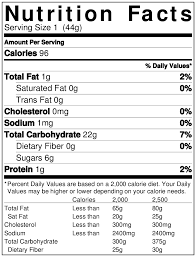
One of the most important, yet the most confusing parts of the nutrition labels is the daily value. The daily value, or % DV on the box, does all the math for you. The daily value doesn’t equal 100% as a whole package. But, adds up with other foods you eat to equal 100% of your daily value. So if you eat a bowl of Greek yogurt, let us say it contains 15% of your daily value of fat, then you eat a granola bar. Now, let us say it contains 3% of your daily value of fat. You have consumed 18% of your daily value of fat for the day. The %DV can inform you about whether a food you’re consuming is high or low in a nutrient in a serving of that food. Food products that have less than or equal to 5% of your daily value of a nutrient are low. If listed 20% or above, it’s considered high, according to fda.gov. It is important to understand this section of the nutrition labels. It will allow them to balance out which foods they should eat and which they should avoid. Those who are health-conscious or dealing with health complications, such as diabetes. Can improve their daily life with this skill.
Serving Size:
Every package or container tells you its serving size. It’s important to understand that most people don’t eat the serving size. Because it is not the average amount. It’s the standard regulated amount. The serving size is also not the recommended dietary amount. But how does serving size play in understanding what you’re consuming? As stated in the article, “Reading Food Labels”, you will get more or “extra” of a nutrient. If you eat more than the serving size listed. Along with a serving size, you’ll see a “servings per container” section. Which tells you the total amount of something in the entire container or package. This allows people to make an executive decision on how much or how little they are consuming.
Calories:
Calories are one of the most talked-about parts of the nutrition labels. Calories are energy, not something like an ingredient that’s added to the product. Calories are often seen as a bad thing, but they’re not. They are essential for everyone’s daily life. But what is a healthy amount depends on each person and the amount of time they’re exercising. In the article, “How to Understand and Use the Nutrition Label Facts”, it states, “To achieve or maintain a healthy body weight, balance the number of calories you eat and drink with the number of calories your body uses. 2,000 calories a day is used as a general guide for nutrition advice. Your calorie needs may be higher or lower and vary depending on your age, sex, height, weight, and physical activity level.”
Ingredient List:
The ingredient list is straightforward. Organized by weight, from most to least. According to Lisa Cooper, a registered and licensed dietitian at Orlando Health, exlpained the ingredient list is one of the most important factors. They all follow the same rule: the amount, or “weight,” determines the placement in the list. The heavier or more of the product is, the closer to the top it will be. Understanding this, people will be able to know which foods to avoid. If they have allergies or are trying to avoid a specific ingredient, it becomes a lot easier with this skill.
Now that you know all this information, you can practice these skills anywhere at anytime. When you read the nutrition facts, decipher what it means. Is this a good product for you to ingest? With this knowledge, people can now focus on their body’s health. Whether they take part in a high-energy activity, have a health issue, or want to improve the quality of life. They can understand how to prepare their body for a long life ahead.